Paint is a furniture material that plays a significant role in decorating the surface of furniture and enhancing its quality. How to evaluate the performance of paints that can be applied in home decoration, as the prices of paints often vary greatly? Is the selected paint worth it? In simple terms, this issue can be evaluated from the following aspects:
The apparent performance of paint:
The apparent performance of paint refers to the properties that can generally be intuitively felt, such as the leveling, flow resistance, dryness, sanding, and color accuracy of the paint.
The intrinsic performance of paint: The evaluation of the intrinsic performance of paint is an important indicator that determines the quality of paint.
1. Viscosity index: Viscosity varies greatly with temperature, so sometimes there is a significant difference in viscosity between winter and summer rainy seasons. This is not due to unstable paint quality, but rather a misconception among some furniture manufacturers about paint.
2. Non volatile content index: also known as solid content, this index is the only indicator for evaluating the effective ingredients contained in paint. There is currently a misconception in the furniture industry that the higher the viscosity of the paint and the more it can be diluted with thinner, the more cost-effective it is, without considering the effective ingredients of the paint. In fact, all the thinner mixed in the paint will eventually evaporate into the air and not remain on the surface of the workpiece. The more thinner the thinner mixed, the greater the waste and seriously affect the environment. Therefore, low viscosity and high solid paint are the mainstream development of the furniture industry.
3. Hardness: Hardness is divided into 14 levels, including 6H, 5H, 4H3H, 2H, H, F, HB, 2B, 3B, 4B, 5B, 6B, etc. The hardness of ordinary paint films is generally between B-3H. The hardness of paint films is only a simple indicator of their performance, and high hardness does not necessarily mean good.
4. Adhesion: Adhesion is an important indicator of the degree of adhesion between paint and substrate, as well as whether the paint will fall off during long-term use of furniture.
5. Warping: It is an important indicator of the flexibility of paint film. The flexibility of paint film is a characteristic indicator that furniture will not crack or peel off during long-term use.
6. Impact resistance: It is also an important indicator of the flexibility of the paint film. This indicator is particularly significant for metallic paint, as the better the impact resistance, the less likely the paint film is to turn white or peel off under impact conditions.
7. Cold resistance: refers to the cold resistance of the paint film under low temperature conditions. This performance is a prerequisite to determine whether furniture can be used in cold winter areas such as northern Chinese Mainland.
8. Heat resistance: This performance is achieved by ensuring that the paint film meets the heating requirements of daily necessities such as hot water and teapots under normal usage conditions.
9. Temperature resistance: This indicator is a higher level of requirement for the paint film. Only paint films that can withstand cold and hot cycling tests can obtain the basic conditions for safe use in any climate.
10. Yellowing resistance: It is a characterization index of the color retention performance of the paint film during use. Generally, the color difference value before and after UV lamp or sun exposure is used to quantitatively characterize the degree of discoloration. The smaller the color difference value, the better the color retention. A well-designed paint film should have minimal color difference changes under testing conditions.
Problems and Solutions in the Use of Paint
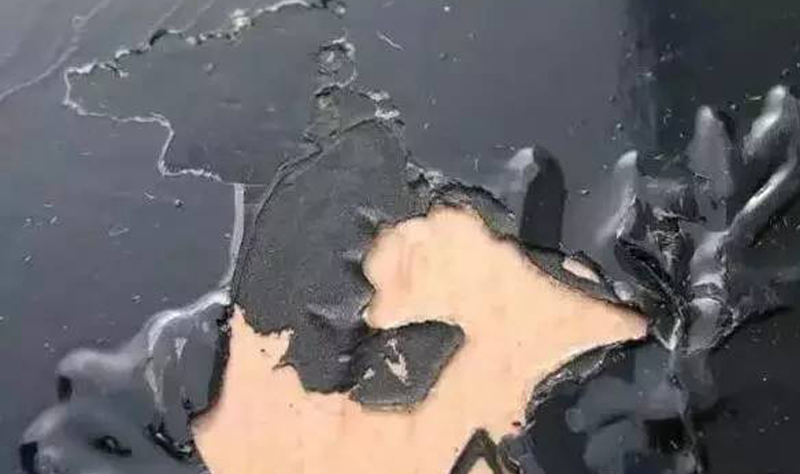
1. Paint peeling off:
Perhaps due to the surface being too smooth, if the original coating is glossy or powdery (with untreated pigment coating added), the new paint will not stick firmly to the surface. Or it may be due to wood decay or rust spots on the metal, or peeling off due to poor paint quality. Small areas of paint peeling can be polished with fine yarn paper, then coated with putty, brushed with primer, and repainted. Large areas of peeling must be completely removed and repainted.
2. Bubbles and needle holes:
The solvent in the coating has not completely evaporated, and the surface has dried, causing the surface to be hit by volatile substances. If it breaks, it is a pinhole, and if it does not break, it is a bubble.
Therefore:
① If the surface dries too quickly, the residual bubbles, curing agents, and water reaction products such as carbon dioxide in the paint will not have time to run away;
② One time thick coating; Insufficient interlayer interval time;
③ The construction temperature is too high, causing the surface to dry too quickly, and the curing agent reacts too much with water, producing excessive carbon dioxide;
④ Excessive water content in coatings (including diluents) or on the surface of the coated material, as well as high ambient temperatures, can cause side reactions between the curing agent and water, resulting in the generation of large amounts of carbon dioxide bubbles;
⑤ Excessive addition of curing agent, especially prone to foaming at high temperatures
Prevention and solution methods:
① Adjust the solvent evaporation rate and add slow drying solvents such as cyclohexanone, CAC, etc. appropriately; After the paint is mixed, let it stand for about 20 minutes to allow the air brought in during the mixing process to evaporate;
② Cannot apply thick coating at once; The interval between each spraying should not be too short;
③ Control the temperature of the spray room and drying room. In hot summer, it is advisable to spray in the morning or evening when the temperature is lower; Avoid direct sunlight exposure, etc. Sometimes when the coated object has just been moved into the painting room from the hot sun, the temperature of the coated object is often very high, and it needs to be cooled for a period of time to room temperature before applying;
④ Avoid construction in places with excessively high ambient temperatures, especially after water grinding, and wait for the surface of the coated material to fully dry from moisture; In summer, hands sweat heavily, so try to avoid touching the object before spraying with your hands;
⑤ Correctly mix the curing agent and slightly reduce the ratio during high temperature and high humidity seasons.
3. Cracks appear:
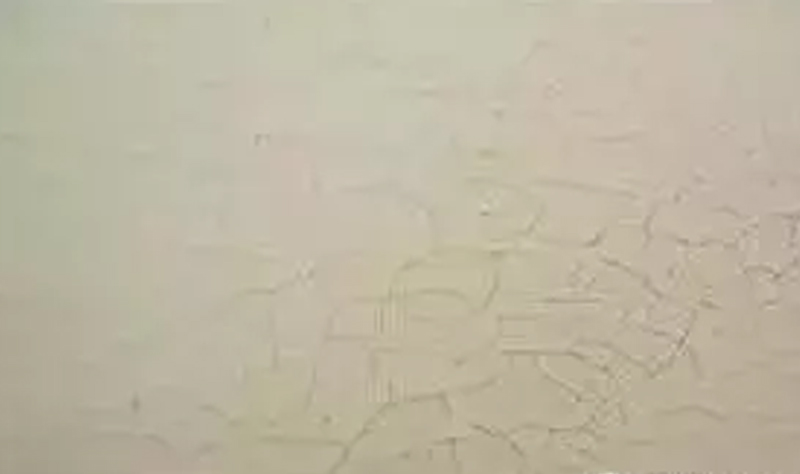
In this case, chemical paint removers or hot air guns are often used to remove the paint before repainting. If the fracture range is not large, you can use a sanding block or wet dry sandpaper dipped in water to remove the broken paint. After smoothing the surface, apply putty, brush with primer, and then repaint.
4. Flow hanging phenomenon:
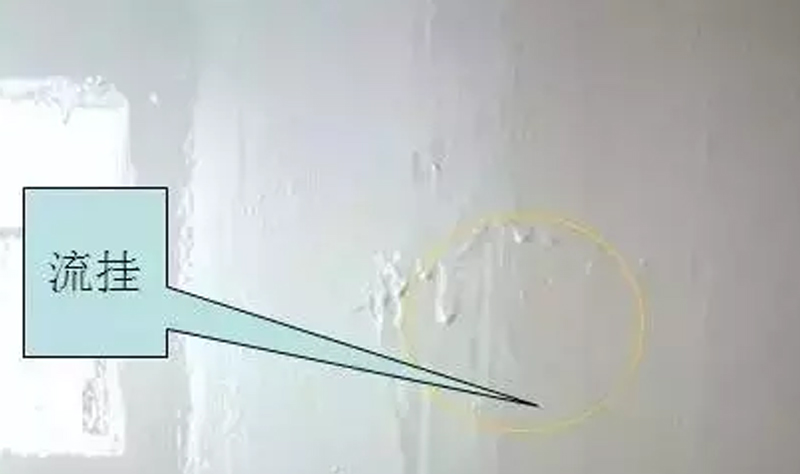
a. The surface of the blank is uneven and the geometric shape is complex;
b. The distance between the spray gun and the workpiece is too close;
c. Too much spraying at once;
d. Too much paint dilution ratio;
e. The construction environment temperature is too low;
f. Insufficient interval time between levels;
g. The evaporation rate of diluent is too slow;
Prevention and treatment methods:
① The white surface should be processed smoothly, and workpieces with complex geometric shapes should be sprayed multiple times;
② The spray gun should maintain a distance of 20-30CM from the workpiece;
③ Reduce air pressure, control oil volume and quantity;
④ Reduce the amount of diluent, and the construction viscosity should be around 16 "(4 # cup);
⑤ If the temperature of the construction site is too low, the temperature of the construction site should be controlled before construction;
⑥ The spraying layer should be sprayed a second time after the first layer of paint film is basically dry;
⑦ Replace with a quick drying diluent;
5. Mold and discoloration:
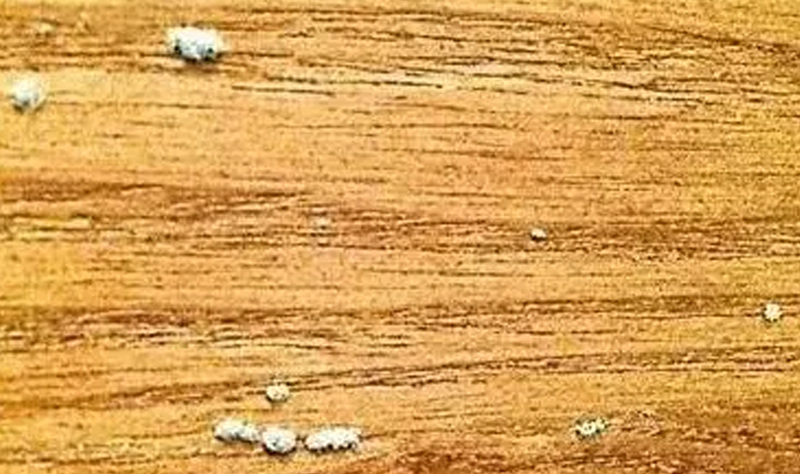
This problem often occurs on damp paint surfaces, such as when water vapor condenses on glass and metal surfaces, resulting in brownish black stains. At this point, a fungicide can be used to treat the moldy area according to the instructions in the manual. After the mold is killed, the surface should be cleaned and then repainted.
6. Stains: There are many reasons for stains on paint surfaces:
For example, the moisture in latex paint dissolves the substances on the wall and rusts out the paint surface, and the wall surface wiped with steel wool will produce rust spots. Leakage of concealed pipes inside the wall and the appearance of stains. To prevent stains, you can first apply a layer of primer containing aluminum powder. If stains have already appeared, you can remove the latex paint at the spot, apply a layer of primer containing aluminum powder, and then repaint.
7. Losing luster:
The reason is that the primer was not applied, or the primer and inner coat were not dried before applying the gloss paint directly, resulting in the gloss paint being absorbed by the wood and losing its luster. The poor quality of glossy paint is also one reason. Grind off the old paint with wet and dry sandpaper, brush off the dust from polishing, wipe the surface clean with a clean damp cloth, wait for it to dry completely, and then repaint it. It should be noted that when painting in environments with very low temperatures, the paint film may also lose its luster after drying.
8. Orange peel, wrinkles: The coating has not fully flowed and smoothed out, and has already dried:
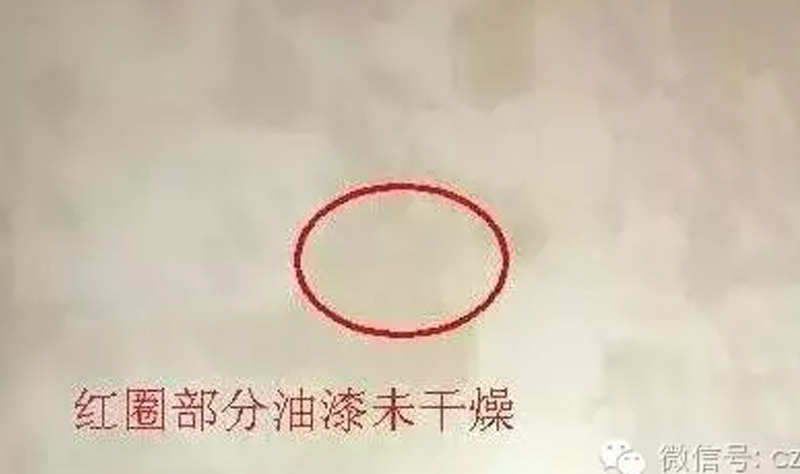
① The paint is too thick;
② Too much pressure, nozzle too close or too far from the workpiece;
③ Improper type of diluent;
④ The ambient temperature is too high;
Prevention and solution methods:
① Adjust the paint to a construction viscosity (4 # cup) of around 16-18;
② Reduce air pressure, keep the distance between the nozzle and the workpiece at around 20-30CM, and do not spray the paint film too thin;
③ The types of diluents should be used in combination, and appropriate slow drying solvents should be selected;
④ Adjust the temperature of the spray booth and control the exhaust flow rate.
9. The reason for the graining phenomenon (poor hand feel):
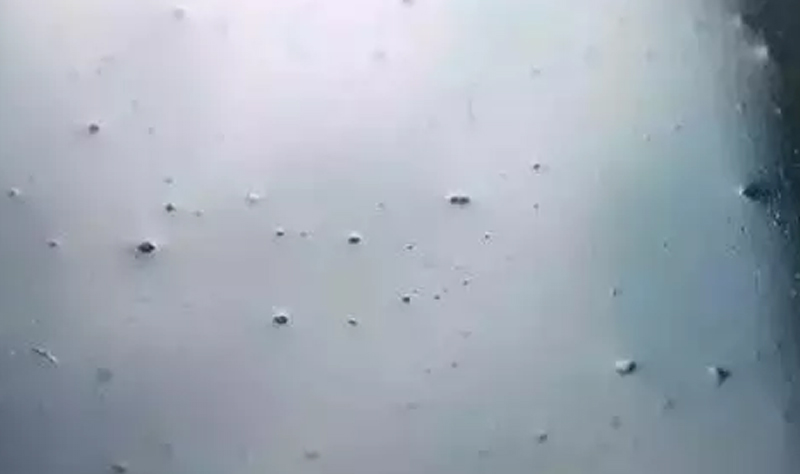
a. Poor construction environment and excessive dust; b. The nozzle is too small and the pressure is too high, resulting in poor paint atomization;
b. Poor ventilation in the spray booth results in a layer of paint mist remaining in the space during construction;
c. The curing agent used has deteriorated;
d. After being mixed with a curing agent for too long, the paint has already gelatinized.
Prevention and solution methods:
① Renovate the spray booth to purify the air, clean the spray booth, and control the entry of unrelated personnel;
② Adjust the nozzle size of the spray gun, the optimal nozzle diameter for topcoat spraying is about 1.5mm, and adjust the pressure;
③ Maintain the optimal distance between the spray gun and the workpiece;
④ Ensure good ventilation in the spray booth and prevent foggy air from staying inside during construction;
Use high-quality curing agents instead; After mixing paint with curing agent, it should be used up within 4 hours.
10. The paint is not dry:
① Foreign substances such as water, alcohol, oil, or wax are present in the coating or on the surface of the coated material, leading to the consumption of curing agents;
② Or the dosage of curing agent additives is insufficient;
③ Or the temperature is too low.
Prevention and solution methods:
① Select the specified diluent (without water, alcohol, acid). Especially banana water, which contains a large amount of alcohol solvents, will consume a large amount of curing agents. However, there are still many small and medium-sized furniture factories that do not use matching diluents. Especially when making the primer, it often causes the primer to not dry, sometimes appearing dry on the surface, but in fact, the resin is not well cross-linked due to the consumption of a large amount of alcohol solvents. As a result, the hardness of the primer is not enough, and it is easy to break through when polishing with sticky sandpaper. When applying the middle or top coat, many problems such as biting the bottom, foaming, poor fullness, poor hardness, and poor adhesion may occur;
② Add curing agent according to the ratio;
③ When the room temperature is below 5 ℃, PU paint dries slowly.
11. Small insects sticking to the paint surface:
Try to remove the small insects while the paint is still wet, and then gently touch the surface with a brush dipped in some paint. If the paint has dried, it is necessary to wait for the paint film to harden before removing the small insects, so as not to make the surface a mess.
12. Dark spots appear on the surface of painted wood:
Perhaps the knots were not sealed before painting, and when exposed to sunlight, the knots were heated and the resin seeped out from the knots. At this point, the paint can be scraped off with a scraper, and then polished with fine sandpaper until the joints are exposed. Then, seal the joints with sealant and wait for them to dry before repainting.
Common knowledge of using paint
1. Temperature and humidity: The normal operating temperature of paint is 15-35 ℃, and the relative humidity should not exceed 80%. If the above temperature and humidity limits are exceeded, it is necessary to consult our technical department before use. If the construction temperature of the paint is too low, the paint film will dry slowly or not dry. If the topcoat is forcibly applied at this time, it will cause cracking of the topcoat in the later stage; The construction temperature of paint is too high, which can cause problems such as leveling, loss of gloss, and blistering; Excessive humidity in the construction environment can cause the paint film to turn white and the hardness to decrease.
2. Storage time of oil depth after blending: After mixing PU paint according to the proportion in the formula, the use time at room temperature should not exceed 6 hours (25 ℃). Paint stored for too long may cause poor leveling of the paint film and particle formation after surface drying.